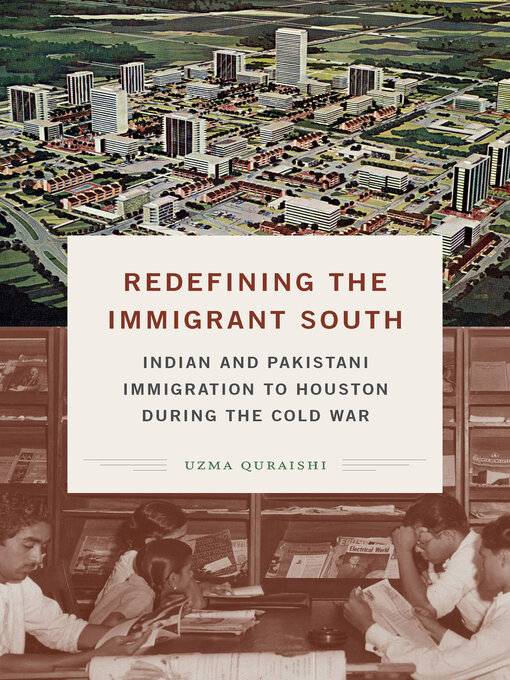
Mining archives and using new oral histories, Uzma Quraishi traces this pioneering community from its midcentury roots to the early twenty-first century, arguing that South Asian immigrants appealed to class conformity and endorsed the model minority myth to navigate the complexities of a shifting Sunbelt South. By examining Indian and Pakistani immigration to a major city transitioning out of Jim Crow, Quraishi reframes our understanding of twentieth-century migration, the changing character of the South, and the tangled politics of race, class, and ethnicity in the United States.
-
Creators
-
Series
-
Publisher
-
Release date
March 25, 2020 -
Formats
-
Kindle Book
- ISBN: 9781469655215
-
OverDrive Read
- ISBN: 9781469655215
-
EPUB ebook
- ISBN: 9781469655215
- File size: 7304 KB
-
-
subjects
-
Accessibility
-
Languages
- English
Formats
- Kindle Book
- OverDrive Read
- EPUB ebook
subjects
Languages
- English
Why is availability limited?
×Availability can change throughout the month based on the library's budget. You can still place a hold on the title, and your hold will be automatically filled as soon as the title is available again.